Overview
In this project, I analyzed a clinical PCOS dataset containing 541 patients to identify key risk factors and built a machine learning model to predict PCOS diagnosis with 86% accuracy.
Dataset
- 541 patients, 45 features
- 32.72% of patients diagnosed with PCOS
- Features include hormone levels, symptoms, BMI, and ultrasound measurements
Key Findings
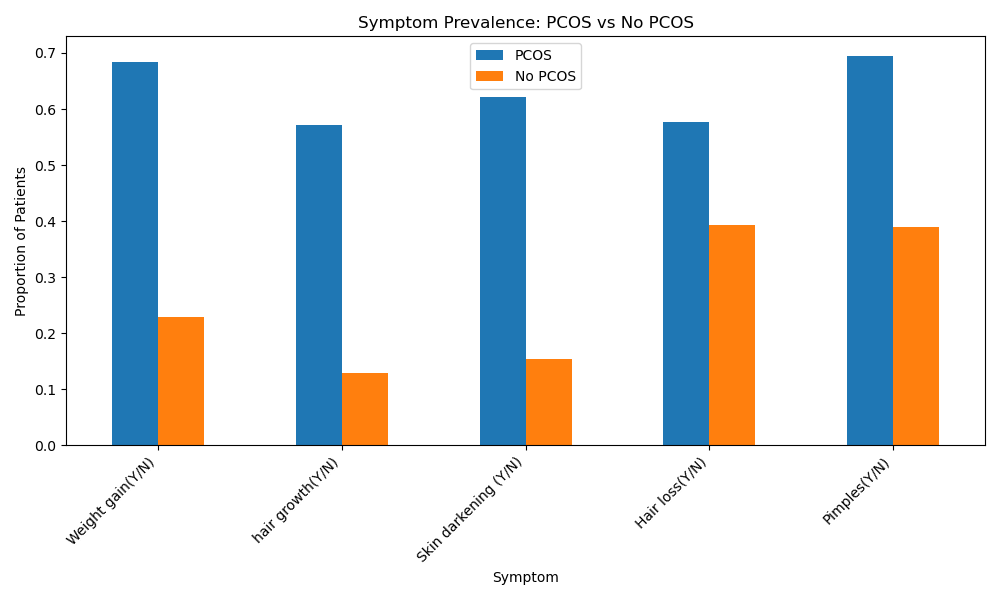
- Weight gain is 3x more common in PCOS patients (68% vs 23%)
- Hair growth and skin darkening are 4x more prevalent in PCOS patients
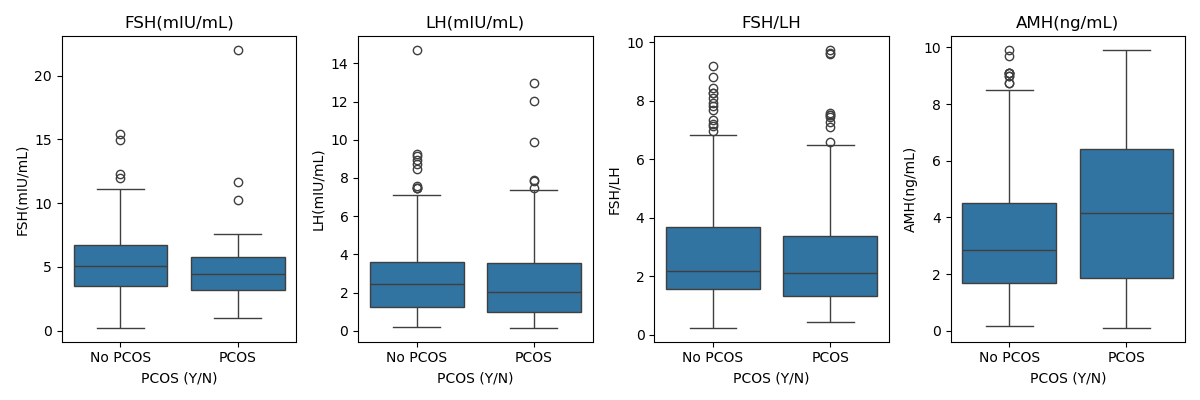
- AMH levels are significantly elevated in PCOS patients is a key clinical marker
Visualizations
Machine Learning Model
Using Logistic Regression with BMI, hormone levels, follicle count, and symptoms as features, the model achieved 86.11% accuracy in predicting PCOS diagnosis.
Statistical Analysis
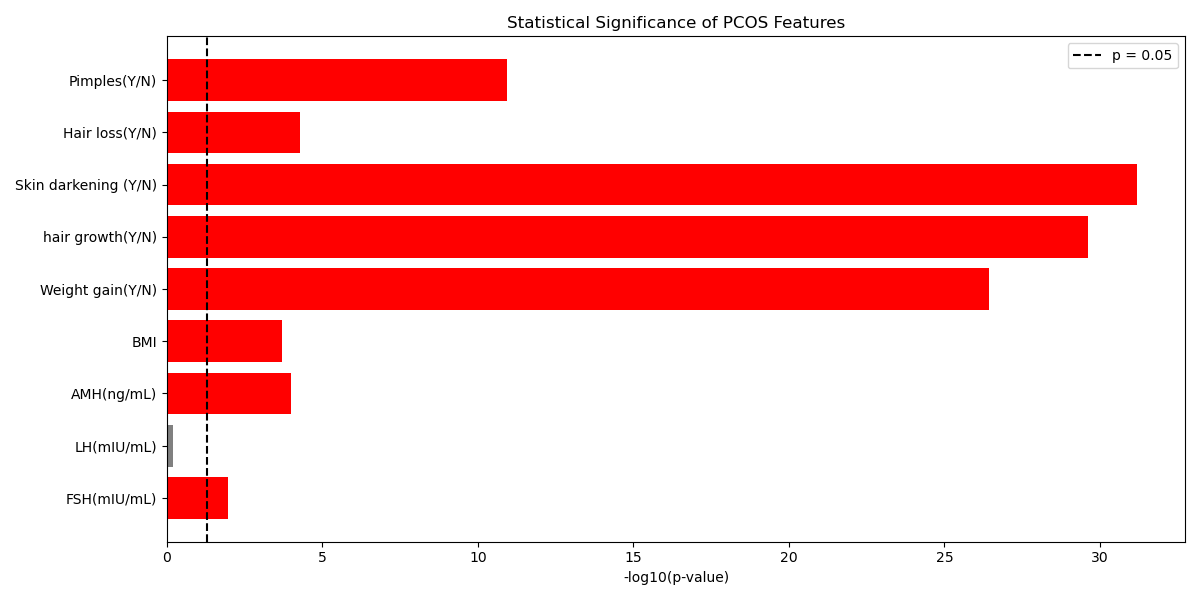
To validate the findings, I conducted t-tests comparing PCOS and non-PCOS groups.
Key findings:
- AMH (p = 0.0001), BMI (p = 0.0002), and FSH (p = 0.0105) showed statistically significant differences between groups
- All five symptoms were highly significant (p < 0.0001)
- Interestingly, LH was the only non-significant marker (p = 0.6230), suggesting it may not be a reliable standalone diagnostic indicator and raising questions about whether LH behaves differently across ethnic populations
PCA Analysis
To explore the underlying structure of the data, I applied Principal Component Analysis (PCA) to key clinical features including BMI, hormone levels, and follicle counts.
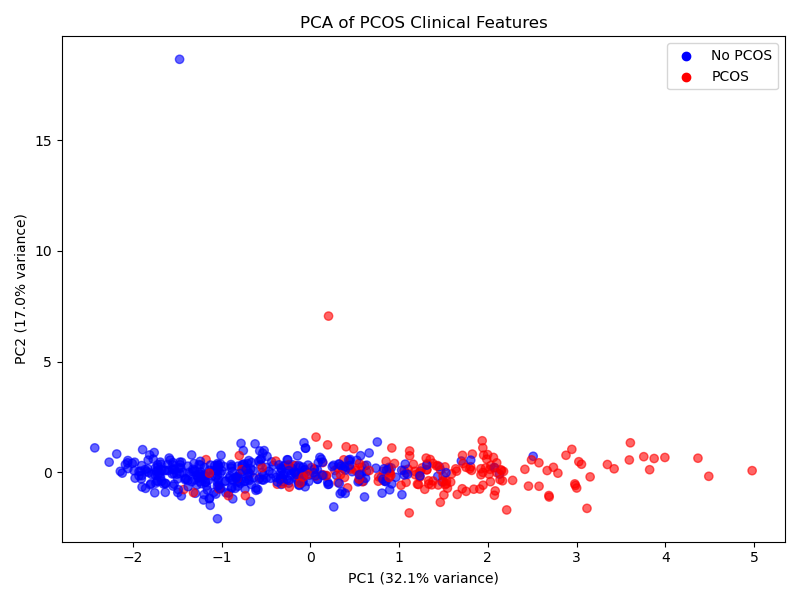
PC1 and PC2 together explain 49.1% of the variance. The plot shows a clear separation between PCOS (red) and non-PCOS (blue) patients along PC1, suggesting that the combination of hormone levels and follicle counts captures meaningful biological differences between the two groups.
Tools Used
- Python, pandas, matplotlib, seaborn, scikit-learn