Overview
In this project, I analyzed the Pima Indians Diabetes Dataset to explore risk factors associated with diabetes and built a machine learning model to predict diabetes outcomes.
Dataset
The dataset contains 768 patients with 9 features including glucose levels, BMI, age, and blood pressure.
Key Findings
- Glucose is the strongest predictor of diabetes (correlation: 0.47)
- Diabetic patients have significantly higher BMI (median ~35 vs ~30)
- Diabetic patients tend to be older (median age ~36 vs ~27)
Visualizations
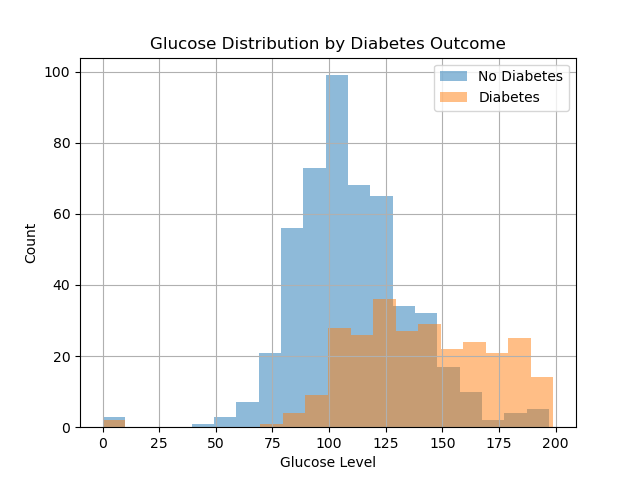
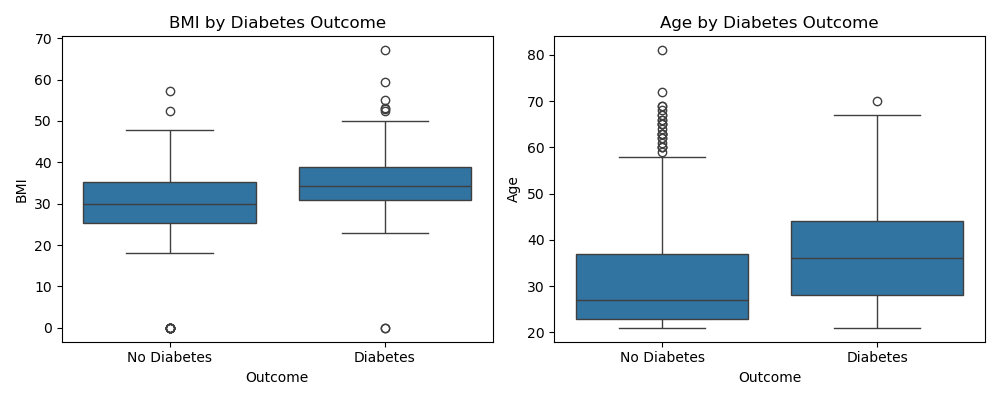
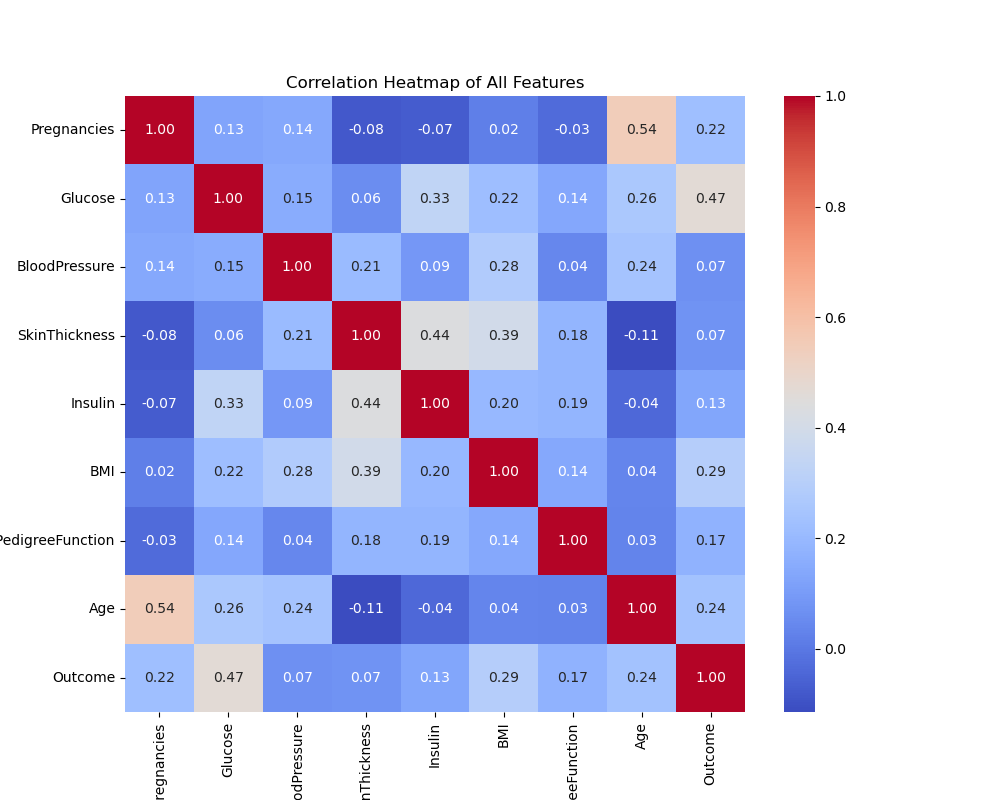
Machine Learning Model
Using Logistic Regression with an 80/20 train/test split, the model achieved 74.68% accuracy in predicting diabetes outcomes.
Statistical Analysis
To validate the findings, I conducted t-tests comparing diabetic and non-diabetic groups.
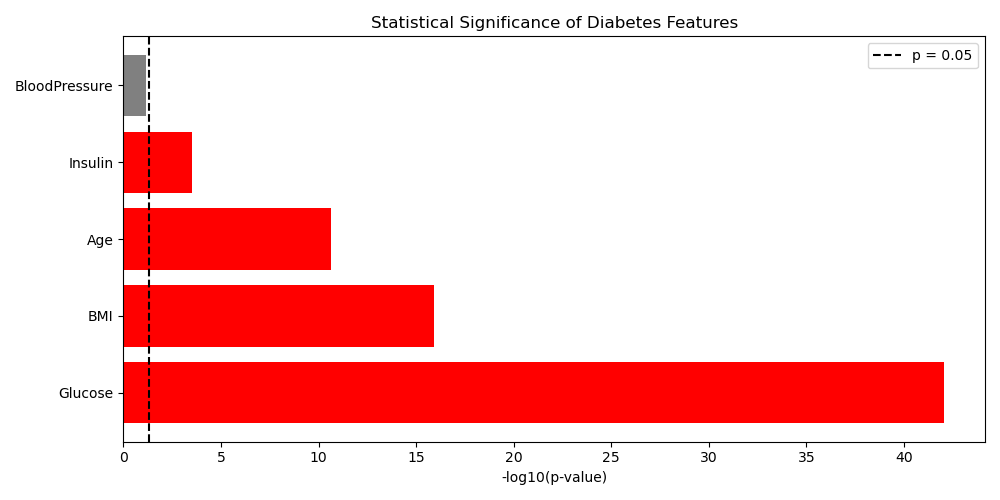
Key findings:
- Glucose showed the strongest difference (p < 0.0001) by far the most important predictor
- BMI and Age were also highly significant (p < 0.0001)
- Insulin was significant (p = 0.0003)
- BloodPressure was the only non-significant feature (p = 0.0715) This is suggesting it may not be a reliable standalone diagnostic indicator
PCA Analysis
PCA applied to key clinical features reveals partial separation between diabetic and non-diabetic patients.
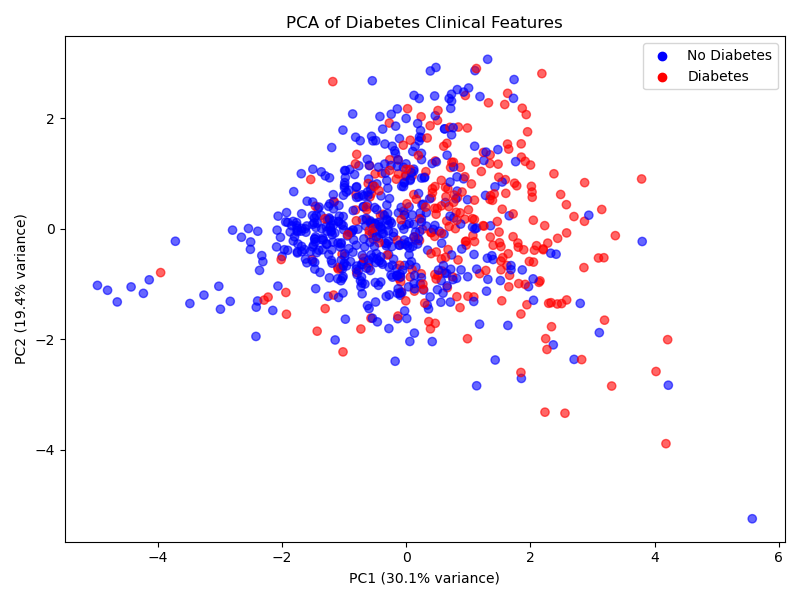
PC1 and PC2 together explain 49.5% of the variance. Compared to the PCOS dataset, the separation between groups is less distinct, reflecting the more complex and multifactorial nature of diabetes.
Tools Used
- Python, pandas, matplotlib, seaborn, scikit-learn